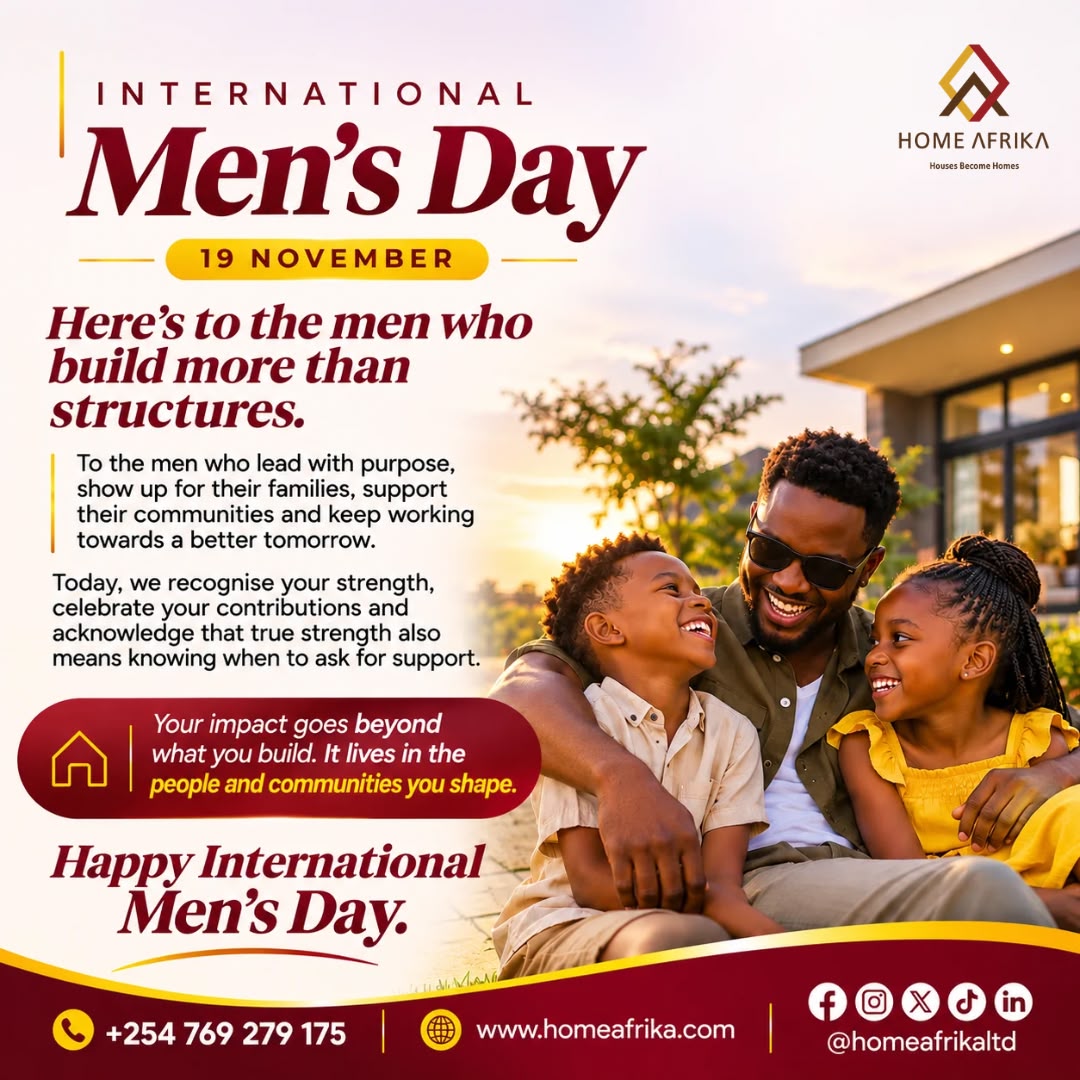
International Men’s Day 2026: Celebrating the Men Who Build More Than Structures
November 20, 2026
Every year on 19 November, the world observes International Men’s Day, a moment to recognise the positive contributions of men and boys, celebrate positive role models and bring attention to issues affecting their health and wellbeing.
For 2026, the global theme is “The Future Is Everyone.” It is a reminder that creating a better society is a shared responsibility, one that requires the participation, support and contribution of everyone.
At Home Afrika, we believe that building a better future goes beyond the structures we put up. It is also about the people, relationships and communities that give those structures meaning.
What is International Men’s Day and why is it celebrated?
International Men’s Day is observed annually on 19 November. It was first celebrated in 1999 in Trinidad and Tobago, initiated by Dr Jerome Teelucksingh.
The day provides an opportunity to recognise men's contributions to society while encouraging conversations about their physical health, mental wellbeing, social challenges and positive roles in their communities.
International Men’s Day is guided by six key objectives:
These objectives make International Men's Day more than a celebration. They create an opportunity for meaningful conversations and positive action.
The 2026 theme: The Future Is Everyone
The theme for International Men's Day 2026, The Future Is Everyone, highlights an important idea: progress is not something one group can achieve alone.
Men and women, boys and girls, families, institutions and communities all have a role to play in shaping a better future.
This means recognising men's contributions without overlooking the importance of equality, mutual respect and shared responsibility.
It also means creating environments where men can participate fully in family life, pursue their ambitions, support others and seek help when they need it.
A stronger society is built when people have the opportunity to contribute, grow and thrive together.
Recognising the men who build stronger families and communities
When we think about the contributions of men, it is easy to focus on visible achievements such as career success, business ownership or financial provision.
But some of the most meaningful contributions happen in everyday life.
It is the father who makes time for his children. The mentor who guides a young person through difficult decisions. The colleague who supports his team. The entrepreneur who creates employment. The community member who steps forward when others need help.
These contributions may not always attract public recognition, but they have a lasting influence on the people around them.
Positive male role models are particularly important for younger generations. The values demonstrated through everyday actions can help shape how boys understand responsibility, respect, relationships and leadership.
Ultimately, a man's impact should not be measured only by what he achieves for himself, but also by the positive difference he makes in the lives of others.
Men's mental health and wellbeing deserve attention
Celebrating men also means recognising the pressures and challenges they may face.
Social expectations can sometimes create the impression that men must always be strong, financially stable and emotionally unaffected by difficulties. While responsibility and resilience are valuable qualities, they should not come at the expense of personal wellbeing.
Men should feel able to discuss their struggles, seek professional support, attend medical check-ups and maintain healthy relationships without fear of judgement.
The World Health Organization has highlighted how rigid expectations around masculinity can discourage men and boys from seeking healthcare and negatively affect their physical and mental wellbeing.
Encouraging open conversations, supportive friendships and access to appropriate care is therefore an important part of recognising men's wellbeing.
Strength is not simply about enduring challenges in silence. It is also about knowing when to seek support and allowing others to stand alongside you.
Building homes, nurturing relationships and creating belonging
A house is a physical structure, but a home is shaped by the people who live in it.
For many men, creating a secure and supportive environment for their families is an important personal aspiration. It may involve working towards homeownership, planning for the future, supporting children's development or creating a place where loved ones feel safe and connected.
Yet the meaning of a home extends beyond ownership. It is found in shared experiences, everyday routines, family relationships and the sense of belonging that people develop within their communities.
At Home Afrika, our philosophy, “Houses Become Homes,” reflects this distinction.
We recognise that property development is not only about land and buildings. It is also about creating opportunities for people to establish roots, build relationships and become part of communities.
The men who contribute to these aspirations do so in different ways: as fathers, partners, professionals, entrepreneurs, builders, mentors and community leaders.
Their contributions help shape the environments in which families grow and future generations find opportunities.
How can we celebrate International Men's Day in Kenya?
International Men's Day offers individuals, families, organisations and communities in Kenya an opportunity to recognise men meaningfully.
Here are a few practical ways to mark the occasion:
Celebration does not always require a grand gesture. Sometimes, a sincere conversation, a message of appreciation or an opportunity to support someone can make a meaningful difference.
A future built together
International Men's Day reminds us that the future is shaped by the choices we make and the contributions we bring into the lives of others.
It is about celebrating men who lead with purpose, support their families, strengthen their communities and continue working towards a better tomorrow.
It is equally about creating a society where men and boys can thrive, where wellbeing is taken seriously and where positive contributions are recognised.
At Home Afrika, we celebrate the men who build more than structures. We recognise those who help build families, inspire future generations and create communities where people can truly belong.
Happy International Men's Day 2026.
The future is everyone's responsibility. Let's build it together.
Home Afrika — Building Futures. Creating Communities. Houses Become Homes.